Be yourself; Everyone else is already taken.
— Oscar Wilde.
This is the first post on my new blog. I’m just getting this new blog going, so stay tuned for more. Subscribe below to get notified when I post new updates.
Be yourself; Everyone else is already taken.
— Oscar Wilde.
This is the first post on my new blog. I’m just getting this new blog going, so stay tuned for more. Subscribe below to get notified when I post new updates.
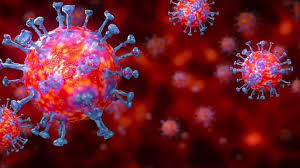
We are in the midst of a worldwide epidemic. As the Coronavirus has swiftly spread globally from city to city, from individual to individual, we are reminded of the weight of our individual choices as members of society. Such an event inevitably shines light upon the structures existent within government and social systems all over the world. We find ourselves in a unique moment in history, one, which enables us to witness and personally experience just how significant our actions and motivations are, including how avidly we engage in selective exposure on social media and how we react when we are incidentally exposed to cross cutting viewpoints. Considering the stakes are literally life or death, it feels eminent that we analyze the way information is being absorbed and circulated around this event.
Selective exposure is the psychological theory that is often used in media and communication research to describe the tendency for people to favor like-minded ideologies, while avoiding counter-attitudinal information. In a society where we receive the majority of our news from social media, it is not surprising that research reported in the article, “Social Media as a Special Case,” found that the composition of one’s social arena or friend group is the most important factor in determining whether or not a person’s newsfeed will be cross cut with counter-attitudinal information. While social media, as a platform for civil engagement, can be a wonderfully effective way for people to interact and engage in discussion regarding current events, it is reported that cross-ideology interaction is limited since individuals are less likely to share or even click on links that are not outsourced from a media outlet they have previous ties to. Therefore, research informs that individual decisions are more restrictive of media exposure than are algorithms. People, who are exposed to more pro-attitudinal information through selective exposure, possibly because they have blocked sources that are not in accordance with their personalized stance on whatever subject matter, are more likely to express their opinions publicly and freely on social media because they feel they stand with the majority, and the majority, with them.
This isn’t to say that individuals are completely isolated to extreme partisan echo chambers, as previously suspected by skeptics of the past. It is, however, to say that the extreme personalization of media, in an effort to avoid cognitive dissonance or unsafe feelings experienced when cross-exposed to counter-attitudinal information, has led people to continually and aggressively seek out and share content that aligns with their pre-existing beliefs.
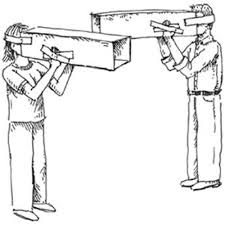
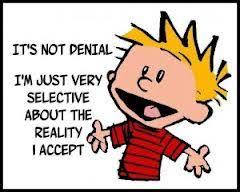
In this time of fear and uncertainty, it is safe to say that some people feel more at ease when they are able to seek out information that contradicts the idea that this virus is as serious as it is, and that it will all blow over sooner, rather than later. I have personally experienced several different groups of people explain to me that the Coronavirus is not as serious as is being reported, that it can only harm you if you are elderly and have pre-existing medical conditions, and even that the entire event is a hoax created as a distraction in the midst of an election year. These individuals are actively going out of their way in order to find opinions in alignment with theirs on the internet and social media, as well as avoiding platforms or people who hold contrary opinions. If this selective exposure continues and these individuals don’t attempt to receive, or even acknowledge truths other than their own, they could be putting society at large at serious risk by not participating in the shelter in place orders or sanitizing practices set in motion to preserve our overall well-being, and continue to spread false information surrounding the epidemic.
Weeks, B. E., Lane, D. S., Kim, D. H., Lee, S. S., & Kwak, N. (2017). Incidental Exposure, Selective Exposure, and Political Information Sharing: Integrating Online Exposure Patterns and Expression on Social Media. Journal of Computer-Mediated Communication, 22(6), 363.
Johnson, Benjamin K.; Neo, Rachel L.; Heijnen, Marieke E. M.; Smits, Lotte; van Veen, Caitrina. COMPUTERS IN HUMAN BEHAVIOR; MAR 2020; 104, Database: Social Sciences Citation Index
Stroud, N. J. (2008). Media use and political predispositions: Revisiting the concept of selective exposure. Political Behavior, 30(3), 341-366. [T]
Knowledge gap is increasing and quality of news is eroding because of the market model that is underlying most American news outlets, and skepticism of media coverage is at an all time high. Because media outlets are feeding the public information that the media thinks the audience wants to hear, we are being bombarded with “dumb news” instead of being presented with an honest dialogue about events political and otherwise. In a time when media outlets are concerned with ratings over honest coverage of events, political polarization is extremely high, and entertainment news is valued over real media coverage, the knowledge gap amongst politically minded individuals and the opposite of them is increasing, and there is a lack of clarity and realness in political news for those who are actively paying attention. We are living in an era of intense division and misinformation, and the majority is increasingly concerned about this matter, including myself. As an individual who is not very active in resourcing news coverage or electoral patterns, I can say that it is daunting to know that if I would like to have a full and accurate scope on electoral candidates and national events, I am going to be forced to seek out information from several (emphasis on several) platforms in order to have the slightest idea of the truth, and I still may not. Even though I am interested in learning more, the fact that I know I am presented with biased information and I do not have a good bases for analyzing the “facts” presented to me also leaves me and a large portion of the population feeling quite a lack of confidence in attempting to engage more in this arena.
To expand on concerns regarding knowledge gap within the public, I would like to talk about new media and selective exposure. On top of mainstream news outlets only providing a biased and not at all well-rounded standpoint for what is happening in the political arena and in daily national news coverage, we are also faced with the new-age dilemma of individuals not experiencing any form of what is referred to as “Byproduct learning,” which is what used to happen when there were only a few options of media in the pre-cable era and people would pick up on news stories simply because it was what was on in the background. Today, if you are either not interested in politics, or like me intimidated to get more involved, you have the option of flipping to another station or platform that is entertainment based. We can simply remove ourselves entirely, which leads to an even greater knowledge gap in our society.
My interpretation of this umbrella of information is that honest media is hard to come by, and most media outlets and news stations today focus on attention grabbing headlines and stories. We are either being misinformed, guided towards extremist and polarizing values, or simply avoiding news media coverage altogether. This could eventually lead to the decay of American democracy as media coverage continues to become exponentially vapid and intentionally deceptive and continues to empower the various cults of personalities leading to increases in political polarization.
Philip M. Napoli, Sarah Stonbely, Kathleen McCollough & Bryce Renninger
(2017) Local Journalism and the Information Needs of Local Communities, Journalism Practice,
11:4, 373-395, DOI: 10.1080/17512786.2016.1146625
Humanes, Maria Luisa. In: Media and Communication. June, 2019, Vol. 7 Issue 3, p1, 3 p.; Cogitatio Press Language: English, Database: Gale In Context: Opposing Viewpoints
This will be my blog site for New Media Civil Society 2020.
This is an example post, originally published as part of Blogging University. Enroll in one of our ten programs, and start your blog right.
You’re going to publish a post today. Don’t worry about how your blog looks. Don’t worry if you haven’t given it a name yet, or you’re feeling overwhelmed. Just click the “New Post” button, and tell us why you’re here.
Why do this?
The post can be short or long, a personal intro to your life or a bloggy mission statement, a manifesto for the future or a simple outline of your the types of things you hope to publish.
To help you get started, here are a few questions:
You’re not locked into any of this; one of the wonderful things about blogs is how they constantly evolve as we learn, grow, and interact with one another — but it’s good to know where and why you started, and articulating your goals may just give you a few other post ideas.
Can’t think how to get started? Just write the first thing that pops into your head. Anne Lamott, author of a book on writing we love, says that you need to give yourself permission to write a “crappy first draft”. Anne makes a great point — just start writing, and worry about editing it later.
When you’re ready to publish, give your post three to five tags that describe your blog’s focus — writing, photography, fiction, parenting, food, cars, movies, sports, whatever. These tags will help others who care about your topics find you in the Reader. Make sure one of the tags is “zerotohero,” so other new bloggers can find you, too.

 New Media Civil Society