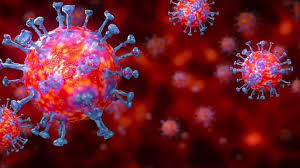
We are in the midst of a worldwide epidemic. As the Coronavirus has swiftly spread globally from city to city, from individual to individual, we are reminded of the weight of our individual choices as members of society. Such an event inevitably shines light upon the structures existent within government and social systems all over the world. We find ourselves in a unique moment in history, one, which enables us to witness and personally experience just how significant our actions and motivations are, including how avidly we engage in selective exposure on social media and how we react when we are incidentally exposed to cross cutting viewpoints. Considering the stakes are literally life or death, it feels eminent that we analyze the way information is being absorbed and circulated around this event.
Selective exposure is the psychological theory that is often used in media and communication research to describe the tendency for people to favor like-minded ideologies, while avoiding counter-attitudinal information. In a society where we receive the majority of our news from social media, it is not surprising that research reported in the article, “Social Media as a Special Case,” found that the composition of one’s social arena or friend group is the most important factor in determining whether or not a person’s newsfeed will be cross cut with counter-attitudinal information. While social media, as a platform for civil engagement, can be a wonderfully effective way for people to interact and engage in discussion regarding current events, it is reported that cross-ideology interaction is limited since individuals are less likely to share or even click on links that are not outsourced from a media outlet they have previous ties to. Therefore, research informs that individual decisions are more restrictive of media exposure than are algorithms. People, who are exposed to more pro-attitudinal information through selective exposure, possibly because they have blocked sources that are not in accordance with their personalized stance on whatever subject matter, are more likely to express their opinions publicly and freely on social media because they feel they stand with the majority, and the majority, with them.
This isn’t to say that individuals are completely isolated to extreme partisan echo chambers, as previously suspected by skeptics of the past. It is, however, to say that the extreme personalization of media, in an effort to avoid cognitive dissonance or unsafe feelings experienced when cross-exposed to counter-attitudinal information, has led people to continually and aggressively seek out and share content that aligns with their pre-existing beliefs.

In this time of fear and uncertainty, it is safe to say that some people feel more at ease when they are able to seek out information that contradicts the idea that this virus is as serious as it is, and that it will all blow over sooner, rather than later. I have personally experienced several different groups of people explain to me that the Coronavirus is not as serious as is being reported, that it can only harm you if you are elderly and have pre-existing medical conditions, and even that the entire event is a hoax created as a distraction in the midst of an election year. These individuals are actively going out of their way in order to find opinions in alignment with theirs on the internet and social media, as well as avoiding platforms or people who hold contrary opinions. If this selective exposure continues and these individuals don’t attempt to receive, or even acknowledge truths other than their own, they could be putting society at large at serious risk by not participating in the shelter in place orders or sanitizing practices set in motion to preserve our overall well-being, and continue to spread false information surrounding the epidemic.
Weeks, B. E., Lane, D. S., Kim, D. H., Lee, S. S., & Kwak, N. (2017). Incidental Exposure, Selective Exposure, and Political Information Sharing: Integrating Online Exposure Patterns and Expression on Social Media. Journal of Computer-Mediated Communication, 22(6), 363.
Johnson, Benjamin K.; Neo, Rachel L.; Heijnen, Marieke E. M.; Smits, Lotte; van Veen, Caitrina. COMPUTERS IN HUMAN BEHAVIOR; MAR 2020; 104, Database: Social Sciences Citation Index
Stroud, N. J. (2008). Media use and political predispositions: Revisiting the concept of selective exposure. Political Behavior, 30(3), 341-366. [T]
 New Media Civil Society